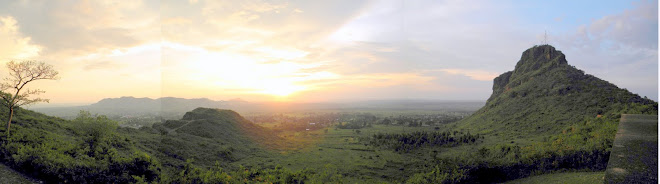
Earlier this month I had the pleasure of going to Kenya for a microfinance conference at the Kenyatta International Conference Center in Nairobi. The trip also provided me with an opportunity to do something I had been dreaming about since I arrived in Uganda: ride a train in Africa. To be truthful, I had ridden once before the train running between Alexandria and Cairo, but the scenery wasn’t too spectacular, just perfectly flat Nile delta farmlands peppered occasionally by a rusting train carcass. Nor did it impress upon you a feelings of colonialism, the train was merely designed to take you from A to, in this case, C, and nothing more. The sub-Saharan lines are different, I was told. They are the ultimate colonial experience, I was assured, and the Mombasa-Nairobi line is no exception. I booked a ticket.
Train travel is also an exciting way to see a country. Paul Theroux, that tireless cynic and the most famous travel writer of the last thirty years, prefers the rail to all other forms. I tend to agree, it is easily the most relaxing way to move about. The course is set and so is the speed, with neither up to manipulation by the passenger, whose only task is to sit back, converse, sleep, eat, walk the compartments or just watch the country go by. To make it even more enjoyable, every railway trip is different. Northern Mexico’s Chihuahua train snakes through craggy peaks and over tall wooden bridges, with stomach-lurching drops on either side. In The Big Red Train Ride, a book about taking the Trans-Siberian Railway during the height of Soviet paranoia, British journalist Eric Newby tells of endless expanses of Siberian forest, broken occasionally by small stations seemingly miles from a phone line or cold beer. His photographer disembarks at every station and valiantly tries to photograph the Soviet peasant despite the near certainty that his roll of film will be confiscated by a policeman. Theroux provides an endless stream of extremely interesting characters described in his Great Railway Bazaar, including one man who proved so interesting that Theroux went looking for him years later back in Britain. Says Theroux, “I sought trains, I found passengers.”
I wanted to take this train because of what it stood for. I alluded to this in the first paragraph, and may have also in earlier posts, I have a guilty obsession of colonial relics here in Africa, and there is no more a physical fixture suggestive of colonial rule in East Africa than the railroad. Construction began at the tail end of the nineteenth century by the British, who wanted to link the port of Mombasa on the Kenyan coast with the commercial centers in the interior. Elsewhere in Africa rails were being built with the same intention. In the Belgian Congo tracks were laid from the port city of Boma to Leopoldville, two hundred miles up the Congo River, too riddled with cataracts to navigate by boat. Rubber and ivory would take three weeks to make the journey by porter, so the railway was constructed to shorten the harvest-to-bicycle tire process. East Africa’s RVR line was built with the same intention, ferrying goods (mainly coffee, tea and ivory) to port at a larger scale, and bringing inland heavy construction equipment. The ancestors of modern Kenyans, Ugandans and Tanzanians had no system of money at the time of the construction, and coercion was out of the question for the British “moral” colonialist, so labor was sought elsewhere. Asians from the Indian subcontinent were brought in in massive numbers. (The Asians kicked out by Amin in the early 1970s were the sons and daughters of those laborers.) The workers faced hard times on the job, but a big danger came also at night. Hundreds lost their lives to the maneaters. One particular stretch of track, the bridge built over the Tsavo River, is Hollywood famous. In 1898, Engineer Lieutenant John Patterson was hired to oversee the construction of the span, when his workers began disappearing in the night. Two mane-less male lions were dragging workers out of the tents and devouring them at an astonishing rate, crippling progress and frightening the workers into mutiny with thoughts of ghosts and devils. Patterson eventually killed both lions, but only after, according to the foreman, they had killed 135 workers in one year. The Ghost and the Darkness, that 1996 masterpiece with Val Kilmer and Michael Douglas, is Hollywood’s poorly acted but nonetheless exciting take on the legend. In another legendary image, an Edwardian Teddy Roosevelt takes pot-shots at now-protected animals from a chair mounted to the front of the engine. In 1931 the railway was completed and the “Lunatic Express” made the 900 mile trip from Mombasa to Kampala . Lions or no lions, the British had to have their railway, and their empire. The feat is just as impressive today as it was at the turn of the century, as one African journalist writes “I was jarred out of this tragic amnesia by the sheer size of the 5930 Beyer-Garrat steam locomotive: Some 30 metres long and a quarter of a million kilogrammes in weight, the 5930 is a blunt, graceless dinosaur of the industrial age: Ugly yet charming, its driving wheels more than a metre in diameter, the body heavily riveted, fitted with giant water and coal tanks and an immense boiler, it is said to be one of the most powerful locomotives ever built. This was the concrete vehicle that brought the empire to us. Standing there, feeling slightly weak at the knees, I thought, “If you can build this behemoth, you can conquer the world…’”
In its heyday, the train took passengers from Mombasa to Kampala. However, many things in Africa are quickly reclaimed by the land if they do not receive a considerable amount of attention and upkeep. I am not sure when the last train passed from Kampala to Nairobi, but, gathering from the overgrowth of weeds and semi-permanent open -air markets covering the tracks on the Ugandan side, it was some time ago.
I had the perfect companion to accompany on my journey, an old friend from Portland. Ellen had grown up just a few doors down from me, and our families still see quite a bit of each other, though the same cannot be said for Ellen and me. Repelled by Southern California materialism and fast food chains, Ellen set off several years ago for the greener pastures of Montreal, where she has truly gone native. However, the stars have aligned here in East Africa: Ellen is currently working at a research station on the slopes of Mt. Kenya, and so we were able to get together while I was in Kenya. Ellen is great. She is very smart, a delight to talk to, well read, and has the admirable tendency to forget the fact that male friends become smellier with age and that sharing a miniscule, enclosed railway compartment with them for thirteen hours straight might not be the most comfortable thing in the world to do. We were both anxious and excited when our tuk-tuk pulled into Mombasa Train Station in plenty of time for our 7 pm departure.
Saturday, April 24, 2010
Monday, April 19, 2010
I guess this African Time thing is starting to get to me
I should begin by apologizing for my absence--I have been in Kenya amassing much fodder for the blogging cannon. Expect some posts to come about my trip.
I am sitting in an internet cafe in Nairobi at the moment, which has particularly sticky keyboards. This seems to be the norm here in Kenya, and I think it is kept this way to discourage political blogging,or perhaps locals just enjoy taking sugary drinks while they surf. I have found myself typing like I did in high school: two index fingers, hovered directly above the keyboard and perfectly straight, pressing with the ferocity of a concert pianist opening Beethoven's 5th. I think the people in the internet cafe are starting to wonder if I have some dexterity issues that require medication, so let me leave you for the time being. I shall return shortly with stories from Kenya, which include: arrests, stepping on freshly chewed gum on multiple occasions, buying the board of governors at a radio station lunch, and meeting a long lost neighbor from Portland.
Sunday, March 28, 2010
That Terrible African Sun
While reading one of my new favorite books, Chinua Achebe's Things Fall Apart, for the first time, I came across this passage which I think accurately describes the transition between the only two seasons: the dry and the rainy. This takes place in Nigeria, I believe, but you get the picture:
“At last the rain came. It was sudden and tremendous. For two or three moons the sun had been gathering strength till it seemed to breathe a breath of fire on the earth. All the grass had been scorched brown, and the sands felt like live coals to the feet. Evergreen trees wore a dusty coat of brown. The birds were silenced in the forest, and the world lay panting under the live, vibrating heat. And then came the clap of thunder. It was an angry, metallic and thirsty clap, unlike the deep and liquid rumbling of the rainy season. A mighty wind arose and filled the air with dust. Palm trees swayed as the wind combed their leaves into flying crests like strange and fantastic coiffure.
“When the rains finally came, it was in large, solid drops of frozen water which the people called ‘the nuts of the water of heaven’. They were hard and painful on the body as they fell, yet young people ran about happily picking up the cold nuts and throwing them into their mouths to melt.
“The earth quickly came to life and the birds in the forests fluttered around and chirped merrily. A vague scent of life and green vegetation was diffused in the air. As the rain began to fall more soberly and in smaller liquid drops, children sought for shelter, and all were happy, refreshed and thankful.”
Friday, March 12, 2010
Pictures
African building
Rachel and Esther. Esther is the owner of Cosy Pot, our favorite African restaurant
Fully loaded matooke truck returning from the market
One of our two Sunday groups
School kids playing with Rachel from a distance. Apparently mothers scare their children with white people, "Don't stay out too late or the mzungu will eat you!"
Eddie at his old primary school
Take me home country roads
It all started with Brilliant Decision by Joel Hedges #436: Let me personally drive the entire field team to the village on Sunday in our friend’s Toyota pick up truck over rough African roads in the middle of the worst rainy season in years.
Fifty of the 57 kilometer commute was on tarmac, and pretty good tarmac by African standards. I think I only had to yell “Watch out!” four or five times as I noticed tire-shredding potholes too late to do anything. (My colleagues did not find this very amusing, nor did they join me in my nervous chuckles about how I didn’t think there was a spare tire in the back.) The remaining seven kilometers is your conventional African dirt road, maddeningly crenated, rocky, dusty, and without a single flat stretch, snaking its way from the highway junction to Kamu trading center at the top of a tall mesa. There had been no rains the day before, so this morning our only problem was the thick dust kicked up by other vehicles. We made it up with relative ease, and parked the car in the market area and went to our first meeting. Normally Eddie and I can walk from our first group to the Pentecostal church where we hold our second meeting of the day, a trip that takes about ten minutes depending on how many acquaintances Eddie sees along the way. This day, however, we were running a little late and so I drove us up the road a ways and parked in the flat area in front of the church , locked up the car and headed inside to do the training session. Eddie and I sat at a table in front while the adults gathered on the first couple rows of pews. My vantage, I noticed almost immediately, would allow me to keep an admiring eye on the truck while we conducted the lesson. I smiled at the thought of the truck’s performance and my driving abilities, but my pleasure was short lived. At the precise moment when Eddie began the lesson, essentially locking us in the church for the next hour, did twenty kids attack the car like a swarm of ants on a dead cockroach: swinging on the roll bars, kicking the tires, drawing on the doors with charcoal, disassembling the side mirrors, jumping up and down in the bed, sliding down the front windshield, and trying to reach in through the cracked window so they could play on the inside. One kid suddenly yelled something and ran off, the troop leader judging by the way the other kids halted their blitzkrieg, and I thought the truck would finally be left alone. Commander Matooke returned no more than five minutes later with thirty-seven more African children armed with plastic bottles, dirt clods, metal wires, sugar cane, long sticks and other implements of destruction. The second attack was much more coordinated, and they had just about breached the passenger door when the rains came. As quickly as they had come, the kids scattered. I breathed a sigh of relief, and was laughing at Commander Matooke’s defeat when I remembered I had left all four windows cracked for ventilation. Drat. I ran out into the rain.
After the meeting we got into the car to head back to the market area. As I put the car into reverse and looked over my shoulder to begin backing out, seventy-two people piled into the back of the truck for the free ride. I didn’t think of this being problematic until the extra weight of the car immediately sunk the back tires into the drainage ditch that lined the road. “Everybody out,” I yelled from the window, wanting to get out of the fix before the rains returned from their respite. With a face tomato red and sweat beginning to soak through my shirt I finally got the truck onto the road, and my audience returned to their positions in the back. We dropped the passengers off in town and began down the dirt road that would take us home and me closer to a cold beer.
A good way, I discovered, to get the passengers in your car to keep quiet on a car ride is to scare the living daylights out of them early on. I began down the hill at a pace I felt comfortable in, a pace not terribly fast, but, then again, there are six policemen in Oregon, California, and Washington who would argue that a pace I feel is comfortable might not be welcomed by the other motorists sharing the road. The truck began to turn sideways while continuing to move in the same direction. I tried tapping the brakes lightly but that only locked the back wheels, already caked with slick clay, speeding up their slide towards the port inside embankment. I could hear Rachel in the passenger’s seat inhale a very deep breath and hold it, challenging me to get us out of this predicament or she would asphyxiate herself. I slipped the truck back down to first gear, which did the trick, and I was allowed to bring the back wheels to their rightful position behind the front ones. Slowly I brought the truck to a halt, in the middle of the road, got out of the car to turn the hub locks on, secretly hoping my passengers would then see the previous 100 meters as motorized failure instead of human error and that all would be fine from then on. Pacification didn’t seem to have worked though; Rachel, I believe, averaged about one breath every two minutes for the next hour, choosing to go blue in the face rather than let me forget I had some very valuable cargo at my fingertips. After the first little slide I slowed considerably, and even began to regain the confidence of my passengers. Vocal praise began to stream in about my off-road driving capabilities, granted I was only driving the car at about three miles an hour. A barefooted man in the later stages of polio and an elderly women carrying a child on her back and three hundred sticks balanced on her head, visible in my side mirrors, were not growing any smaller. The man with polio might have even been gaining on us. But we were moving forward. After some time I began to get cocky again, enough, even, to try out third gear. Hey, maybe this won’t be so bad, I thought. We’ll get back much earlier than I predicted. Arsenal vs. Chelsea? Hah, I think so! Nope, just kidding, third gear was a bad idea. Downshift. Yep, lets go all the way back to first gear. Crap, that usually works. Tap the brakes, well, it was worth a shot. Pray? Phew, it worked.
The last stretch of the seven kilometer Hell Road is quite unassuming. The steep downhill that had challenged me so much gradually mellows into a much more gentle grade. The road is anything but flat,, mind you, this is still Africa. The road was very rounded, peaking in the center while each side fell away progressively steeper towards the muddy canals lining either side. Every time I tried to speed up along this four kilometer stretch, the back tires of the truck would start to fishtail, skating towards a mucky doom, and I was forced to limit our pace to second gear. Thoughts of speeding up and seeing if I could keep the truck on the road and out of the embankment crossed my mind a number off times in that last hour, strengthened by the image of a sun dress-wearing Rachel, with her shoulder against the tailgate and fancy shoes in her hand, pushing hard to free a stuck vehicle while wet clay from the spinning tires sprays her front. I thought better of it -- Rachel, after all, knows where I sleep at night.
We reached the tarmac of the main highway over an hour after we had set off from Kamu Trading Center. Rachel began breathing normally again, and conversation resumed in a rusty sort of way. I got out of the truck, soaked to the bone with sweat, and unlocked the hubs, first the right wheel and then the left. Before I stepped back into the car I turned to look at the dirt road winding up the steep cliff side behind us,almost like a successful emperor might look at a freshly conquered land. But I was distracted by something rounding a bend in the road in the distance. There, about a kilometer back, was a man with polio was hobbling up the road. I could just make out his bare feet.
Fifty of the 57 kilometer commute was on tarmac, and pretty good tarmac by African standards. I think I only had to yell “Watch out!” four or five times as I noticed tire-shredding potholes too late to do anything. (My colleagues did not find this very amusing, nor did they join me in my nervous chuckles about how I didn’t think there was a spare tire in the back.) The remaining seven kilometers is your conventional African dirt road, maddeningly crenated, rocky, dusty, and without a single flat stretch, snaking its way from the highway junction to Kamu trading center at the top of a tall mesa. There had been no rains the day before, so this morning our only problem was the thick dust kicked up by other vehicles. We made it up with relative ease, and parked the car in the market area and went to our first meeting. Normally Eddie and I can walk from our first group to the Pentecostal church where we hold our second meeting of the day, a trip that takes about ten minutes depending on how many acquaintances Eddie sees along the way. This day, however, we were running a little late and so I drove us up the road a ways and parked in the flat area in front of the church , locked up the car and headed inside to do the training session. Eddie and I sat at a table in front while the adults gathered on the first couple rows of pews. My vantage, I noticed almost immediately, would allow me to keep an admiring eye on the truck while we conducted the lesson. I smiled at the thought of the truck’s performance and my driving abilities, but my pleasure was short lived. At the precise moment when Eddie began the lesson, essentially locking us in the church for the next hour, did twenty kids attack the car like a swarm of ants on a dead cockroach: swinging on the roll bars, kicking the tires, drawing on the doors with charcoal, disassembling the side mirrors, jumping up and down in the bed, sliding down the front windshield, and trying to reach in through the cracked window so they could play on the inside. One kid suddenly yelled something and ran off, the troop leader judging by the way the other kids halted their blitzkrieg, and I thought the truck would finally be left alone. Commander Matooke returned no more than five minutes later with thirty-seven more African children armed with plastic bottles, dirt clods, metal wires, sugar cane, long sticks and other implements of destruction. The second attack was much more coordinated, and they had just about breached the passenger door when the rains came. As quickly as they had come, the kids scattered. I breathed a sigh of relief, and was laughing at Commander Matooke’s defeat when I remembered I had left all four windows cracked for ventilation. Drat. I ran out into the rain.
After the meeting we got into the car to head back to the market area. As I put the car into reverse and looked over my shoulder to begin backing out, seventy-two people piled into the back of the truck for the free ride. I didn’t think of this being problematic until the extra weight of the car immediately sunk the back tires into the drainage ditch that lined the road. “Everybody out,” I yelled from the window, wanting to get out of the fix before the rains returned from their respite. With a face tomato red and sweat beginning to soak through my shirt I finally got the truck onto the road, and my audience returned to their positions in the back. We dropped the passengers off in town and began down the dirt road that would take us home and me closer to a cold beer.
A good way, I discovered, to get the passengers in your car to keep quiet on a car ride is to scare the living daylights out of them early on. I began down the hill at a pace I felt comfortable in, a pace not terribly fast, but, then again, there are six policemen in Oregon, California, and Washington who would argue that a pace I feel is comfortable might not be welcomed by the other motorists sharing the road. The truck began to turn sideways while continuing to move in the same direction. I tried tapping the brakes lightly but that only locked the back wheels, already caked with slick clay, speeding up their slide towards the port inside embankment. I could hear Rachel in the passenger’s seat inhale a very deep breath and hold it, challenging me to get us out of this predicament or she would asphyxiate herself. I slipped the truck back down to first gear, which did the trick, and I was allowed to bring the back wheels to their rightful position behind the front ones. Slowly I brought the truck to a halt, in the middle of the road, got out of the car to turn the hub locks on, secretly hoping my passengers would then see the previous 100 meters as motorized failure instead of human error and that all would be fine from then on. Pacification didn’t seem to have worked though; Rachel, I believe, averaged about one breath every two minutes for the next hour, choosing to go blue in the face rather than let me forget I had some very valuable cargo at my fingertips. After the first little slide I slowed considerably, and even began to regain the confidence of my passengers. Vocal praise began to stream in about my off-road driving capabilities, granted I was only driving the car at about three miles an hour. A barefooted man in the later stages of polio and an elderly women carrying a child on her back and three hundred sticks balanced on her head, visible in my side mirrors, were not growing any smaller. The man with polio might have even been gaining on us. But we were moving forward. After some time I began to get cocky again, enough, even, to try out third gear. Hey, maybe this won’t be so bad, I thought. We’ll get back much earlier than I predicted. Arsenal vs. Chelsea? Hah, I think so! Nope, just kidding, third gear was a bad idea. Downshift. Yep, lets go all the way back to first gear. Crap, that usually works. Tap the brakes, well, it was worth a shot. Pray? Phew, it worked.
The last stretch of the seven kilometer Hell Road is quite unassuming. The steep downhill that had challenged me so much gradually mellows into a much more gentle grade. The road is anything but flat,, mind you, this is still Africa. The road was very rounded, peaking in the center while each side fell away progressively steeper towards the muddy canals lining either side. Every time I tried to speed up along this four kilometer stretch, the back tires of the truck would start to fishtail, skating towards a mucky doom, and I was forced to limit our pace to second gear. Thoughts of speeding up and seeing if I could keep the truck on the road and out of the embankment crossed my mind a number off times in that last hour, strengthened by the image of a sun dress-wearing Rachel, with her shoulder against the tailgate and fancy shoes in her hand, pushing hard to free a stuck vehicle while wet clay from the spinning tires sprays her front. I thought better of it -- Rachel, after all, knows where I sleep at night.
We reached the tarmac of the main highway over an hour after we had set off from Kamu Trading Center. Rachel began breathing normally again, and conversation resumed in a rusty sort of way. I got out of the truck, soaked to the bone with sweat, and unlocked the hubs, first the right wheel and then the left. Before I stepped back into the car I turned to look at the dirt road winding up the steep cliff side behind us,almost like a successful emperor might look at a freshly conquered land. But I was distracted by something rounding a bend in the road in the distance. There, about a kilometer back, was a man with polio was hobbling up the road. I could just make out his bare feet.
Saturday, March 6, 2010
Wine Movements
NWPR article written about my cousin and his ScoREVOLUTION!
http://www.nwpr.org/07/HomepageArticles/Article.aspx?n=6949
Spread the gospel!
Alas, the wine situation here in Uganda is not so great. I have the option of a $30 jug of Carlo Rossi or a $9 bottle of mediocre South African wine that has been sitting in the sun in the supermarket so long that the coating of dust has been bleached.
http://www.nwpr.org/07/HomepageArticles/Article.aspx?n=6949
Spread the gospel!
Alas, the wine situation here in Uganda is not so great. I have the option of a $30 jug of Carlo Rossi or a $9 bottle of mediocre South African wine that has been sitting in the sun in the supermarket so long that the coating of dust has been bleached.
Subscribe to:
Posts (Atom)